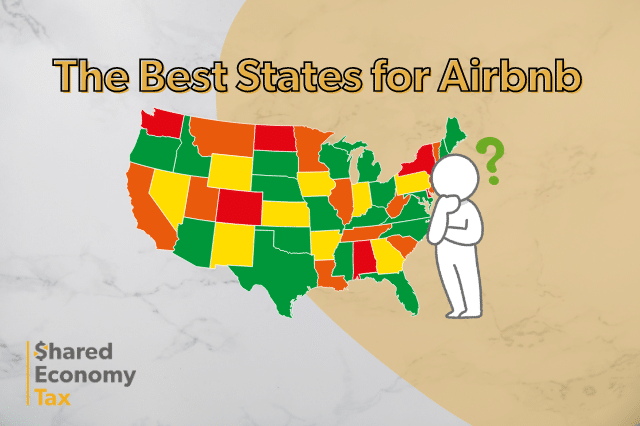
Choosing the right location to launch or expand your Airbnb business is one of the most important decisions you’ll make as a short-term rental investor. Pick the right state and you benefit from strong occupancy, investor-friendly regulations, and a tax environment that lets you keep more of what you earn. Pick the wrong one and you’re fighting restrictive local ordinances, high tax burdens, and sluggish demand before you ever collect your first booking.
This guide covers what to look for when evaluating a state for Airbnb investment, which three states are leading the market in 2026, and which emerging markets are worth keeping on your radar.
What to Consider When Choosing a State for Airbnb
Every investor’s criteria will differ based on budget, risk tolerance, and investment goals. That said, these four factors consistently determine whether a state is worth your capital for a potential Airbnb purchase.
Short-Term Rental Regulations
The legal landscape for short-term rentals varies significantly across states and even between cities within the same state. New York and California have some of the strictest regulations in the country, with New York City effectively making whole-apartment hosting near-impossible under Local Law 18, and Los Angeles capping short-term rentals at 120 nights per year. At the other end of the spectrum, states like Florida and Texas have built reputations for protecting the rights of STR operators.
Even in host-friendly states, city-level rules can differ dramatically from state-level policy. Miami Beach, for example, bans STRs in most residential zones despite Florida being one of the most permissive states overall. Always verify the regulatory environment at the city and neighborhood level, not just the state level, before committing capital.
Investors should also monitor pending legislation. The STR regulatory landscape is actively evolving, and markets that are open today can tighten quickly as local governments respond to housing pressure and neighborhood complaints.
State and Local Taxes
The tax burden on a short-term rental comes from multiple layers: state sales tax, local lodging or transient occupancy taxes, and income tax on rental profits. In high-tax jurisdictions, the combined tax on a single booking can exceed 14 percent. States with no income tax, including Florida, Texas, Tennessee, and Nevada, give hosts a built-in profitability advantage that compounds significantly over a full operating year.
As of 2026, most states require platforms like Airbnb to automatically collect and remit state and local taxes, which simplifies compliance for hosts. However, automatic collection doesn’t always cover every local tax. Hosts may still need to register separately for county or city-specific taxes, so always verify your complete tax obligations with a qualified STR tax advisor before you list.
Real Estate Market
Property acquisition cost is the single biggest variable in your return on investment calculation. A market with strong occupancy and solid nightly rates can still underperform if the purchase price doesn’t support positive cash flow at your financing terms. Most STR investors need roughly 50 to 60 percent occupancy at conservative nightly rates to cover mortgage and operating expenses, so understanding the relationship between property values and achievable revenue in your target market is essential.
Look for markets where real estate values are growing but haven’t yet priced out investors, and where short-term rental demand is driven by multiple sources rather than a single seasonal peak.
Occupancy Rate
Occupancy rate is one of the clearest indicators of market health. It reflects how consistently properties are being booked and directly determines the reliability of your income. When analyzing occupancy, focus on the specific city or neighborhood you’re targeting rather than statewide averages. A state average of 55 percent can mask the fact that certain submarkets are running at 70 percent while others struggle to hit 40 percent.
The most sustainable markets combine multiple demand drivers: leisure tourism, business travel, event-driven demand, and where possible, year-round appeal that smooths out seasonal dips.
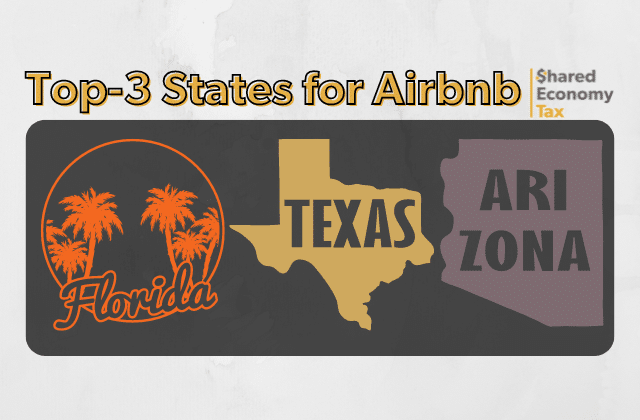
The Top-3 States for Airbnb in 2025
Based on feedback from our clients, industry colleagues, and market research, these are the three best states for aspiring Airbnb hosts to consider.
Florida
Florida holds its position as the most host-friendly state in the country in 2026, and the market data backs that up. A consistent theme across Florida markets this year is that supply is growing rapidly while nightly rates and revenue continue to trend upward at the same time. That dynamic signals that traveler demand is still outpacing new inventory, which gives existing hosts pricing power even as competition increases.
Fort Lauderdale is one of the state’s standout performers, with average annual revenue approaching $46,000 per listing, a 44.7 percent occupancy rate, and average nightly rates around $365. Tampa is running a 43.7 percent occupancy rate with over 3,700 active listings and maintains one of the most accessible regulatory environments in the state. Coastal markets like Panama City Beach continue to command strong demand through the summer season, with top-performing properties averaging well above $390 per night during peak months.
From a regulatory standpoint, Florida’s preemption law limits local governments from imposing blanket bans on short-term rentals, creating more stable ground for investors than most other states can offer. Hosts do need to register with the Florida Department of Business and Professional Regulation and obtain a vacation rental license, but the process is straightforward compared to markets like New York or California. Florida also has no state income tax, which meaningfully improves net returns for hosts when the full tax picture is taken into account.
One important caveat: even within Florida, city-level rules vary. Miami Beach bans STRs in most residential zones. Always verify local ordinances before purchasing.
Texas
Texas has no state income tax and a broadly host-friendly regulatory environment, and it pairs those structural advantages with diverse, year-round demand that few states can match. Austin draws millions of visitors for events like SXSW and Austin City Limits, with peak occupancy spiking well above 80 percent for top-performing properties during major festivals. Average annual revenue for Austin listings runs around $47,000, with a market-wide occupancy rate near 55 percent.
Dallas is one of the more compelling stories in the Texas STR market right now. The Dallas-Fort Worth metroplex is home to multiple Fortune 500 headquarters and one of the country’s most active convention and business travel ecosystems. Current market data shows over 4,000 active listings in Dallas with occupancy rates among the highest in the state for well-positioned properties, and the broader DFW region continues to attract both leisure and corporate travelers year-round. Larger properties are particularly strong performers, with five-bedroom homes pulling in well over $80,000 annually in prime neighborhoods.
Houston rounds out the Texas picture with steady business travel demand driven by the energy sector, medical tourism, and the Port of Houston. The city currently operates with relatively open STR regulations, and its lower property acquisition costs compared to Austin create favorable yield potential for investors focused on cash flow over appreciation.
The main watch item in Texas is Austin’s regulatory environment. The city actively enforces its STR ordinances, and operating without proper permits carries meaningful financial penalties. Dallas has lighter citywide restrictions, though specific neighborhoods and HOAs may impose their own rules. As always, neighborhood-level due diligence is essential.
Arizona
Arizona’s combination of low taxes, host-friendly state law, and year-round demand from snowbirds, golf travelers, and business visitors makes it one of the most reliable STR markets in the country. The state has historically protected homeowners’ rights to operate short-term rentals, and while local ordinances have tightened somewhat in recent years, the overall environment remains favorable compared to most coastal states.
Scottsdale is the state’s flagship market. Average annual revenue for Scottsdale listings sits around $51,000, with average nightly rates near $396 and over 4,100 active listings in the market. Top-performing properties, particularly larger homes catering to golf groups, corporate retreats, and milestone travel, regularly command $700 or more per night during peak season. January 2026 data showed Scottsdale’s occupancy at 51.4 percent with year-over-year improvement in both rate and RevPAR, reinforcing its position as one of the Southwest’s most resilient winter rental markets.
Phoenix is the state’s high-volume market. With over 6,000 active listings and a median occupancy rate around 66 percent, Phoenix supports a wide range of investor strategies, from single-family homes near the stadium and convention districts to apartment-style properties targeting digital nomads and extended-stay business travelers. Average annual revenue runs approximately $45,000, and the city’s scale means there’s enough data to benchmark performance reliably across neighborhoods before you buy.
The main seasonal consideration for Arizona investors is summer. Phoenix and Scottsdale both see meaningful occupancy dips from May through August as temperatures rise sharply. Investors who plan around this seasonality, either through competitive pricing adjustments or by targeting properties that can attract summer travelers with pools and shaded outdoor spaces, tend to outperform those who don’t account for it in their projections.
Rising Stars
These markets have gained momentum with our clients and colleagues in recent years, and they remain serious contenders for the top-three list as their STR ecosystems mature.
Nevada
Nevada’s business-friendly environment, zero state income tax, and massive tourism infrastructure make it a natural fit for short-term rental investment. Las Vegas and Reno draw tens of millions of visitors annually for conventions, entertainment, and events, and that demand translates into consistent booking volume for well-located properties. The state’s relatively permissive STR regulations and strong real estate fundamentals continue to attract new investors, and the tourism pipeline shows no signs of slowing.
Tennessee
Nashville has become one of the most talked-about STR markets in the country over the past few years, and for good reason. Bachelorette parties, music tourism, and a thriving food and hospitality scene generate consistent high-season demand, and markets like Gatlinburg and Pigeon Forge deliver strong year-round occupancy driven by Smoky Mountain visitors. Tennessee has no state income tax and a generally welcoming regulatory environment for STR hosts, and its lower property acquisition costs relative to coastal markets create attractive yield potential.
The Tax Side of Your Airbnb Investment
No matter which state you invest in, the tax strategy behind your STR operation will have a major impact on your actual return.
Short-term rental properties offer some of the most powerful tax advantages available to individual investors. Hosts who materially participate in their rental activity may be able to use losses from the property to offset other income, including W-2 wages and self-employment income. Depreciation, including accelerated bonus depreciation restored to 100 percent under the One Big Beautiful Bill Act for qualifying property placed in service after January 19, 2025, can generate significant paper losses in the early years of ownership that meaningfully reduce your overall tax liability.
Deductible expenses for STR operators typically include mortgage interest, property taxes, insurance, maintenance, cleaning, platform fees, and utilities, among others. Getting the accounting right from day one matters, and keeping a clean profit and loss statement for each property throughout the year is what makes the tax strategy defensible.
Shared Economy Tax specializes in strategic tax services for Airbnb hosts and real estate investors. Our team of veteran tax pros can help you maximize your deductions, navigate STR-specific tax rules, and structure your investment to keep more of what you earn. Get started with a one-on-one strategy session to see how much you can save.
Closing Thoughts on The Best States for Airbnb
Shared Economy Tax specializes in strategic tax services for Airbnb hosts and real estate investors. Our team of veteran tax pros can help grow your business by maximizing your tax savings. Get started now with a one-on-one strategy session with one of our tax pros to see how much you can save.
